Towards clean water and intelligent use
Smart Use
Ecological

Towards clean water, smart use
Water is essential for our cultivation and our activities. At the same time, water resources are under increasing pressure: stricter regulations and growing public demand for more efficient and cleaner use require new solutions. That is why we are working to achieve a closed water cycle: less mains water, more rainwater harvesting and wastewater treatment so that it can be reused.
From consumption to efficiency
We use around 57,000 m³ of water per year. As we use cellulose as a growing substrate, our water consumption is relatively high. Cellulose needs to be washed regularly and makes recirculation difficult, as it contains small fibres that can clog filters.
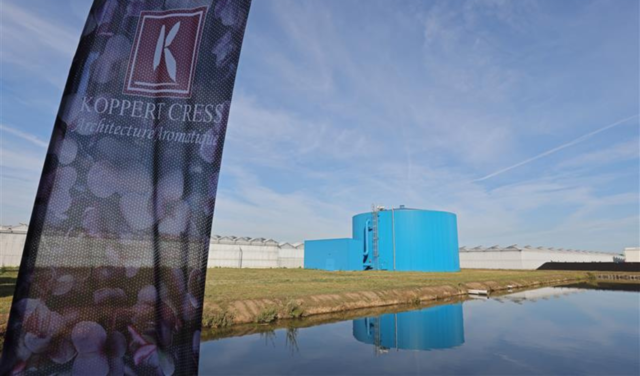
That is why we are focusing on innovative solutions, such as our goal of switching completely from mains water to rainwater. We are currently in the design phase for the construction of additional rainwater collection basins. This will allow us to continue using collected rainwater even during periods of drought, without having to resort to mains water.
Sviluppo di un sistema idrico circolare
Il ricircolo richiede una filtrazione intelligente. Per i nostri prodotti speciali, foglie e fiori commestibili, ricicliamo già ampiamente l'acqua. Per i nostri crescioni, questo rimane una sfida più grande a causa dell'uso della cellulosa come mezzo di coltivazione.
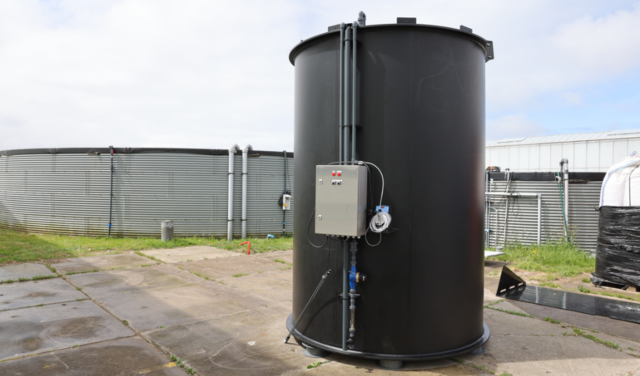
Stiamo quindi studiando soluzioni alternative. I test dimostrano che la sedimentazione meccanica e la filtrazione sono attualmente i metodi più efficaci per mantenere l'acqua pulita e renderla riutilizzabile. I primi progetti per l'installazione di questo tipo di sistema di filtrazione sono già stati completati: un ulteriore passo avanti verso un sistema idrico completamente circolare.
Anche le acque reflue residue devono soddisfare i più severi standard ambientali. Nel nostro precedente Cress Compass abbiamo riferito che stiamo collaborando con alcuni partner alla realizzazione di un filtro di coltivazione: un bioreattore che degrada i nutrienti senza l'uso di sostanze chimiche. Poiché non utilizziamo prodotti fitosanitari, l'acqua purificata è alla fine pulita almeno quanto l'acqua superficiale circostante. Attualmente stiamo lavorando per rendere operativa l'installazione del prototipo.
Il nostro obiettivo: scaricare nelle acque superficiali solo quando potremo dimostrare che la nostra acqua depurata è di qualità uguale o superiore.
Inoltre, forniamo circa 19.500 m³ di acque reflue all'anno all'impianto di trattamento collettivo De Vlot, dove, in qualità di membri del consiglio di amministrazione, contribuiamo all'ottimizzazione dei processi di trattamento delle acque e alla promozione della sostenibilità a livello settoriale.
Monitoring and transparency
Water quality starts with awareness. That is why we have launched the four-year Transparante Tuinder project. In collaboration with Wageningen University & Research, the Hoogheemraadschap van Delfland, start-up Plant-e and twelve other growers, we are developing a real-time water quality monitoring system. This allows us to detect any incidents immediately and take direct action.
Cleaner than the canal
Our ambition is clear: by 2027, all our wastewater will comply with the EU Water Framework Directive, or even exceed it, meaning it will be cleaner than the surface water in our region.
‘My dream? Not to wait for regulations, but to take a collective lead,’ says Bart van Meurs. ‘As Division Q, we can be the driving force behind this process, but of course in collaboration with partners such as the Municipality of Westland and the Delfland Water Authority.’
Sustainable stories
Introduction
Powerful stories that capture our nature: sustainability at every level and in every aspect.
-
Ecological
Product Carbon Footprint: an insight into the emissions from a box of Cress
Product Carbon Footprint: insight into the emissions from a box of Cress
At Koppert Cress, we work every day to reduce our impact on the climate and the environment. Insight is essential if we are to make targeted improvements. That is why we have been calculating our Corporate Carbon Footprint (CCF) for many years: the total emissions of our organisation.
However, as not every product has the same impact, we wanted to be able to manage this even more precisely. That is why we have also developed a Product Carbon Footprint (PCF) for our products. This involves mapping the total greenhouse gas emissions throughout a product’s entire life cycle: from the seed right through to the waste disposal of the packaging (or ‘cradle-to-grave’).
-
Ecological
Koppert Cress's climate goals validated by SBTi
Sustainability requires more than just ambition. That is why Koppert Cress had its climate targets validated by the Science Based Targets initiative (SBTi). This independent organization assesses whether climate targets are aligned with the latest climate science and contribute to limiting global warming. With this validation, the SBTi confirms that Koppert Cress’s climate targets are specific, measurable, and aligned with international climate goals.
-
Social
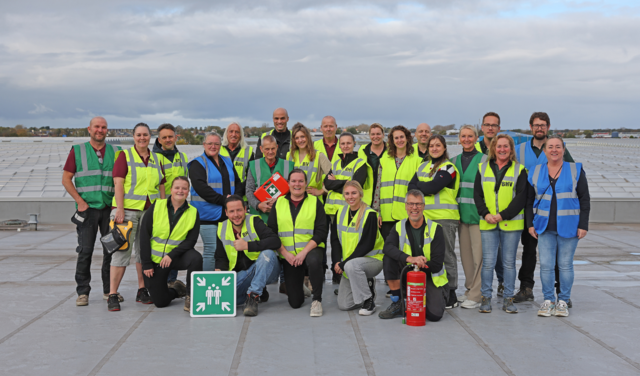
Working Together in an Inclusive Organisation
Why is building trust so important to us? Trust shows someone that we believe in their abilities, intentions and dedication to contribute to a shared goal.
-
Social
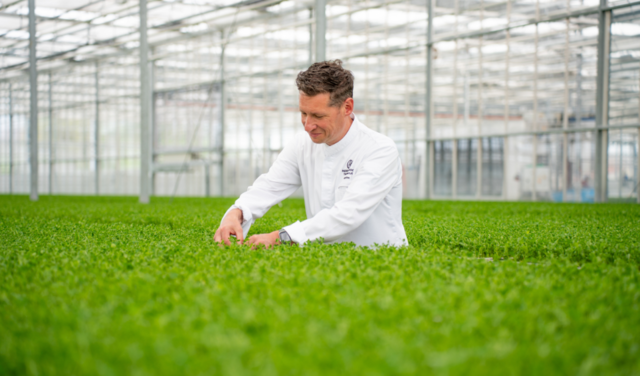
Learning to Change: Connecting Healthy Food, Education and Gastronomy
Koppert Cress and Hotelschool The Hague demonstrate how education, gastronomy and horticulture can strengthen one another. With storytelling as a connecting force, they bring the origin, value and experience of food to life — inspiring the next generation to contribute to a healthier food future.