New zero-impact greenhouse for Koppert Cress
Building the future of horticulture together
Ecological

Fossil-free farming as a conscious choice
The new greenhouse is in line with the ambition set out in the agreement between the greenhouse horticulture sector and the government to achieve fossil-free cultivation by 2040. For Koppert Cress, this is not an isolated objective, but part of a broader strategy. With the recent switch to geothermal energy and the development of this new greenhouse, another major step has been taken towards making cultivation more sustainable.
“For us, sustainability is not a project, but a direction,” says Stijn Baan, director of Koppert Cress. “This greenhouse demonstrates that with a clear vision, collaboration and courage, you can take steps that make sense both ecologically and economically. Fossil-free cultivation requires choices made today, with an eye to tomorrow.”
For chefs and customers, this means working with products grown in an environment where taste, quality and consistency are paramount, whilst the story behind the product becomes increasingly sustainable.
One greenhouse, one integrated system
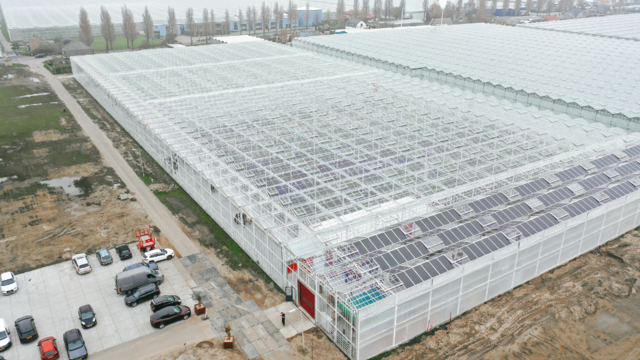
The greenhouse, covering approximately 1.2 hectares, has been designed as a single integrated unit. Various technologies work together to utilise energy, climate and growing conditions as efficiently as possible. These include Low-E glass for structural heat reduction, insulated facades, low-grade heat suitable for geothermal energy, an airflow floor system for heating, dehumidification and air circulation, Direct Air Capture for CO₂ from the outside air, and drones for mechanical crop protection.
Some of these innovations are still in the development or validation phase. It is precisely through continuous testing, measuring and fine-tuning that the greenhouse remains on track to achieve its goal: fossil-free cultivation in a way that is technically sound and works in practice.
Cooperation as a foundation
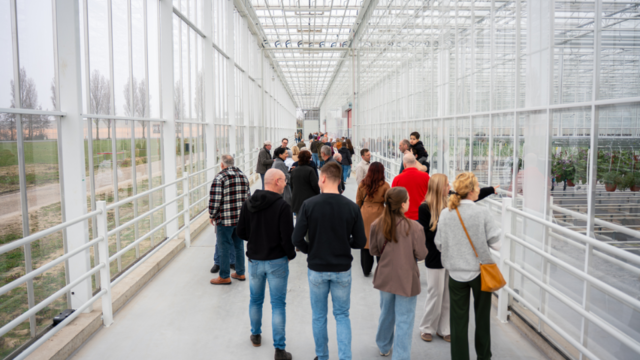
The construction of the greenhouse is the result of close collaboration between Koppert Cress, Division Q, technical suppliers, construction partners, research institutions and local authorities in the Westland region.
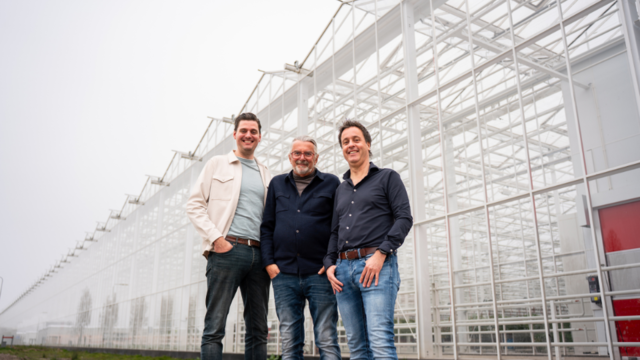
“Our role was to make Koppert Cress’s ambitions technically and practically achievable,” says Bart van Meurs, director of Division Q. “Not by stacking individual solutions, but by designing a single integrated system together with all partners.”
That collaboration forms the basis of the project. From greenhouse construction and glazing to energy, water technology, lighting, engineering, sensor technology and mechanical crop protection: every partner contributes to a greenhouse that demonstrates what is possible when vision and execution come together.
Looking ahead
The new greenhouse is a significant milestone, but not the end of the journey. Koppert Cress remains committed to investing in innovations that contribute to a sustainable food chain and a future-proof gastronomy.
The ambition is clear: to grow crops without fossil fuels, whilst respecting people, nature and flavour. This enables chefs to continue working with products that are not only exceptional in taste, texture and aroma, but also fit within a sustainable production model.